 Musings with Randheer
Happiness is not a destination but a skill - one that can be developed through understanding, practice, and conscious choice. True happiness comes from within and cannot be dependent on external circumstances or other people’s actions. This chapter explores how to build this skill step by step for a better life
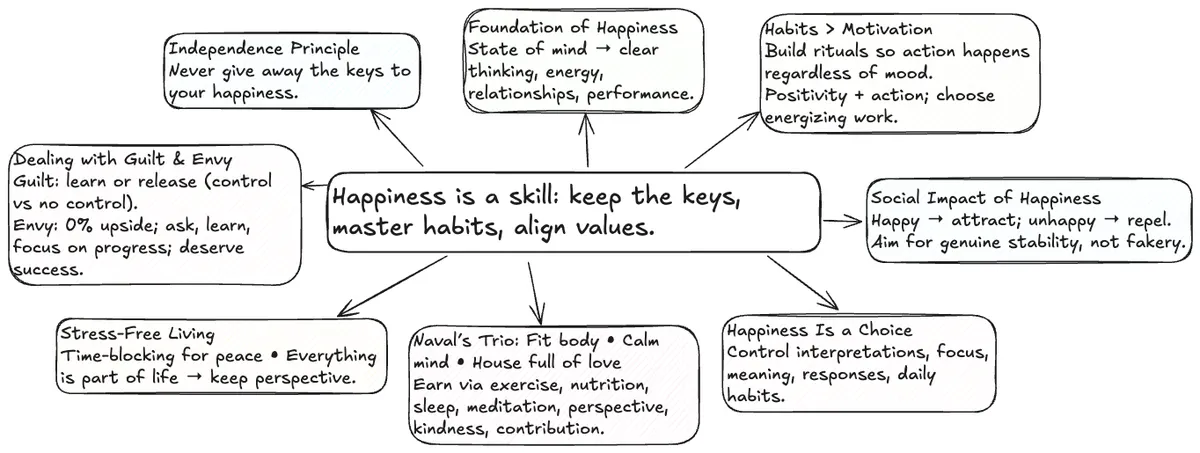
The Foundation of Happiness
Happiness is a State of Mind: This isn’t just philosophical wisdom; it’s practical reality. Your emotional state determines how effectively you handle daily challenges and how much you enjoy your experiences.
When you’re happy:
- You think more clearly and make better decisions.
- You’re more attractive to others and build stronger relationships.
- You have more energy and resilience for challenges.
- You perform better in work and personal endeavors.
When you’re unhappy:
- Your judgment becomes clouded.
- You unconsciously push people away.
- You have less energy for important activities.
- You create negative cycles that reinforce unhappiness.
The Independence Principle
Never give the key to your happiness to someone else. This is perhaps the most important lesson about emotional well-being. When your happiness depends on:
- Others’ approval or behaviour.
- External circumstances beyond your control.
- Outcomes you cannot guarantee.
- Situations that may change.
You become emotionally unstable and lose your power to create the life you want. Keep control of your happiness to stay steady and strong.
Dealing with Guilt and Envy
Two emotions that destroy happiness more than any others are guilt and envy. Both cause you to lose energy and peace of mind while providing no benefits in return. Let’s look how to handle them with simple steps.
Understanding Guilt
Charlie Munger experienced profound guilt when his son died of cancer in his arms while rushing between hospitals. He eventually realised that guilt was the worst thing to have because it wasn’t helping him move forward in life.
Framework for Handling Guilt:
- If the guilt comes from something you could have controlled and avoided, take the lesson and don’t repeat the mistake.
- If the guilt comes from something outside your control, release it entirely - you couldn’t have done anything different.
- Remember that prolonged guilt either motivates positive change or becomes destructive self-punishment.
The Destructive Nature of Envy
Buffett and Munger note that envy is the only one of the seven deadly sins that provides no pleasure. Munger observes: “Envy is crazy. It’s 100% destructive… If you get those things out of your life early, life works a lot better.”
Reframing Envy
Instead of feeling bad about what others have that you don’t:
- Ask them directly how they achieved what they have.
- Use their success as motivation for your own efforts.
- Focus on your own progress rather than comparisons. Comparison is thief of joy.
- Remember that envy destroys relationships while learning builds them.
The Best Defense Against Envy
Deserve the success you get. When you know you’ve earned your achievements through genuine effort, you’re less likely to envy others and more likely to appreciate what you have.
The Philosophy of Habit and Motivation
Many popular terms like “motivation” and “positivity” are overrated because they’re perceived as magic solutions. The reality is different.
The Problem with Motivation
If you need daily motivation to do something, you’re probably doing the wrong thing. The work you choose should be motivating enough in itself to encourage action.
The Power of Habits and Routines
You need to develop rituals, habits, and routines that push you to act automatically, regardless of your mood on any particular day. This is especially important for:
- Exercise and meditation.
- Learning and skill development.
- Creative work and personal projects.
The Motivation-Action Relationship
- Positivity alone accomplishes nothing - positivity + action creates results.
- Choose work that naturally motivates you rather than work requiring external motivation.
- Build habits around the things that matter most, so they happen regardless of how you feel.
Practical Application
Develop habits for exercise and meditation so you do them automatically, not because you found motivation that day. Similarly, choose work and projects that energize rather than drain you.
The Social Impact of Happiness
The state of happiness acts as a “two-way sword” in social interactions:
When You’re Happy:
- People are drawn to your positive energy.
- Situations tend to flow more smoothly.
- Others want to spend time with you.
- You create positive environments wherever you go.
When You’re Unhappy:
- You unconsciously “bleed” negative energy onto others.
- People sense this negativity and naturally distance themselves.
- Even close relationships can suffer as your negativity affects them.
- You create cycles of isolation and further unhappiness.
This isn’t about being fake or suppressing emotions - it’s about developing genuine emotional stability.
The Choice of Happiness
Elon Musk tweeted: “Remember happiness is a choice.” This insight is profound because it shifts responsibility from external circumstances to internal decision-making.
You cannot control:
- What happens to you
- How others behave
- Economic conditions
- Natural disasters
- Many life circumstances
You can control:
- How you interpret events
- Where you focus your attention
- What meaning you assign to experiences
- How you respond to challenges
- Your daily habits and practices
Practical Happiness Strategies
Present Moment Awareness: Life mostly happens inside your mind through your perceptions and interpretations. Seneca noted: “We suffer more in imagination than in reality.”
Most unhappiness comes from:
- Dwelling on past events you cannot change.
- Worrying about future scenarios that may never occur.
- Comparing your reality to imagined alternatives.
- Creating stories about what things “mean”.
Objective Judgment: Marcus Aurelius advised: “See things for what they are, not what you think them to be.” This means:
- Separating facts from interpretations.
- Questioning your assumptions about situations.
- Looking for evidence rather than relying on emotions.
- Considering alternative explanations for events.
The Inner Work
True happiness requires developing qualities like:
Self-Awareness: Understanding your emotional patterns, triggers, and responses through practices like:
- Daily meditation
- Regular journaling
- Honest self-reflection
- Feedback from trusted friends
Emotional Regulation: Learning to manage your emotional responses through:
- Breathing techniques
- Mindfulness practices
- Cognitive reframing
- Physical exercise and movement
Value Alignment: Living according to your authentic values rather than external expectations through:
- Clarifying what truly matters to you.
- Making decisions based on your principles.
- Saying no to things that don’t align with your values.
- Regularly reassessing your direction.
The Naval Ravikant Framework
Naval offers a profound insight: “A fit body, a calm mind, a house full of love. These things cannot be bought — they must be earned.”
Fit Body: Physical health directly impacts mental and emotional well-being through:
- Regular exercise that releases endorphins.
- Proper nutrition that supports brain function.
- Adequate sleep that allows emotional processing.
- Movement that reduces stress and anxiety.
Calm Mind: Mental peace comes from:
- Meditation and mindfulness practices.
- Letting go of what you cannot control.
- Developing perspective on daily challenges.
- Creating mental space between stimulus and response.
House Full of Love: Emotional fulfilment comes from:
- Building meaningful relationships.
- Practicing kindness and compassion.
- Contributing to others’ well-being.
- Creating environments of warmth and connection.
The Framework for Stress-Free Living
Time Blocking for Mental Peace: Organize your life so that when it’s time to focus on something specific, your mind isn’t worried about other tasks. This means:
- Planning your day in advance.
- Assigning specific times for specific activities.
- Trusting your planning so you don’t need to constantly reconsider priorities.
- Focusing fully on the current task without mental distraction.
Everything is Part of Life: Remember that individual tasks, jobs, or situations are not life itself - they’re just parts of life. This perspective helps you:
- Maintain balance during stressful periods.
- Avoid making any single area too important.
- Keep perspective on temporary challenges.
- Focus on the whole rather than getting lost in parts.
The Long-Term Happiness Strategy
Building Emotional Resilience: Develop the ability to bounce back from setbacks through:
- Accepting that challenges are part of life.
- Learning from difficult experiences.
- Building a support network of relationships.
- Developing coping strategies that work for you.
Creating Positive Momentum: Small daily choices compound into significant changes in well-being:
- Choose gratitude over complaint.
- Choose action over worry.
- Choose growth over comfort.
- Choose contribution over consumption.
Remember: Happiness is not about constant joy or the absence of problems. It’s about developing the inner stability and wisdom to navigate life’s inevitable ups and downs while maintaining your essential well-being and capacity for joy.