 Musings with Randheer
Building a startup is one of the most challenging endeavours in business, requiring a unique combination of vision, execution, and adaptability. Through observation and experience, I’ve identified key principles that separate successful ventures from failed ones.
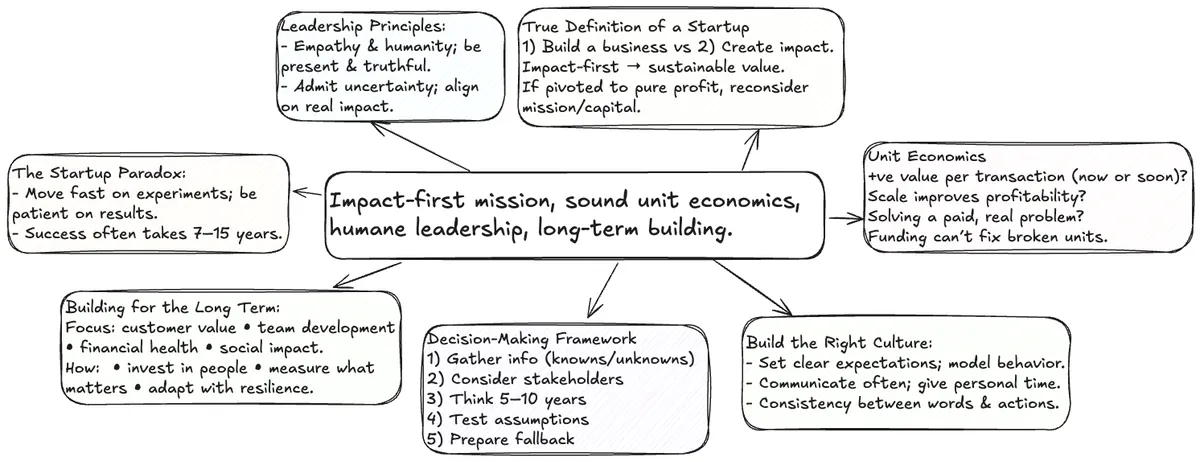
The True Definition of a Startup
There are fundamentally two reasons people start companies:
- To build a business — focused primarily on revenue and profit.
- To create impact — focused on solving problems and building a business around solutions.
I believe the second definition represents true entrepreneurship. When your primary motivation is impact, you create sustainable value. When it’s just about money, you often build unsustainable businesses that don’t serve anyone well.
If your startup pivots away from creating meaningful impact toward pure profit-seeking, it may be time to reconsider whether you should continue or return the money to investors and pursue something more meaningful.
Unit Economics: The Foundation
One of the most critical mistakes I’ve observed is startups with fundamentally flawed unit economics - business models that will never be profitable even at scale.
Before raising money or scaling operations, ask yourself:
- Does each transaction generate positive value after all costs or it will generate positive value in futher after all costs?
- Will economies of scale actually improve profitability?
- Are we solving a real problem people will pay to solve?
No amount of funding can fix a business model that loses money on every transaction.
Leadership Principles:
- Lead by Empathy and Humanity: When you’re confused or struggling, be honest with your team. People don’t expect you to be superhuman. Vulnerability builds trust and stronger relationships than pretending to have all the answers.
- Be Present and Truthful: Your presence matters. Be accessible to your team and communicate honestly, especially during difficult times. When you don’t have a clear vision or are facing challenges, sharing that prevents speculation and gives people the clarity they need to make their own decisions.
- Focus on Impact: Always return to the question: “Are we solving a real problem for real people?” If the answer becomes unclear, reassess your direction.
Building the Right Culture:
- Set Clear Expectations: Define what success looks like and what behaviours you expect. Be specific about values and how they translate into daily actions.
- Model the Behaviour: You can’t ask others to follow standards you don’t maintain yourself. Consistency between your words and actions is crucial.
- Communicate Frequently: Regular updates prevent speculation and keep everyone aligned. Share both good news and challenges.
- Give People Personal Time: Burnout is real and counterproductive. People need time to recharge, learn new skills, and maintain relationships outside work.
The Startup Paradox
Startups require both speed and patience:
Move Fast on experiments and learning, but be patient with results. We often overestimate what we can accomplish in the short term and underestimate what’s possible over longer periods.
Many successful companies that are still called ““startups”are actually 7-15 years old (Flipkart, Paytm, Zomato). Real success takes time.
Decision-Making Framework
When facing difficult decisions:
- Gather Information: What do we know? What don’t we know?
- Consider Stakeholders: How does this affect customers, employees, investors, and society?
- Think Long-Term: What are the 5-10 year implications?
- Test Assumptions: What can we validate before making big commitments?
- Prepare for Failure: What’s our backup plan if this doesn’t work?
The Role of Integrity
Integrity isn’t just about being honest - it’s about alignment between your values, words, and actions. In startups, this means:
- Honest Communication: Tell investors, employees, and customers the truth about your situation.
- Consistent Values: Don’t compromise your principles for short-term gains.
- Fair Treatment: Treat all stakeholders with respect and fairness.
- Admitting Mistakes: Acknowledge errors quickly and focus on solutions
Learning from Failure
Most startups fail, but failure can be incredibly educational if you approach it correctly:
- Analyze Objectively: What went wrong and why?
- Take Responsibility: What could you have done differently?
- Extract Lessons: What principles will guide your next venture?
- Share Knowledge: Help others avoid similar mistakes
Building for the Long Term
Sustainable startups focus on:
- Customer Value: Are we genuinely improving people’s lives?
- Team Development: Are we helping people grow and learn?
- Financial Health: Are we building a profitable, sustainable business?
- Social Impact: Are we making the world better?
To extend this, consider Tesla’s long-term vision: Elon Musk didn’t just build cars; he addressed climate change through electric vehicles, creating a movement that inspired global shifts in energy. This aligns with Chapter 13’s probabilistic thinking—bet on high-impact problems with uncertain but massive upsides.
In practice, build long-term by:
- Defining Your North Star: Create a mission statement that survives pivots, like Amazon’s customer obsession.
- Investing in People: Offer growth opportunities, tying into self-improvement journey.
- Measuring What Matters: Track impact metrics alongside profits.
- Adapting with Resilience: Use failures as fuel, drawing from Chapter 1’s Stoic pillars to turn obstacles into advantages.
Remember: building something meaningful takes time. Focus on creating lasting value rather than chasing quick wins. This approach not only builds successful startups but lives of purpose.