 Musings with Randheer
Procrastination isn’t a character flaw — it’s a habit that can be understood and overcome through practical strategies. The battle against procrastination is really a battle for immediate action over delayed gratification.
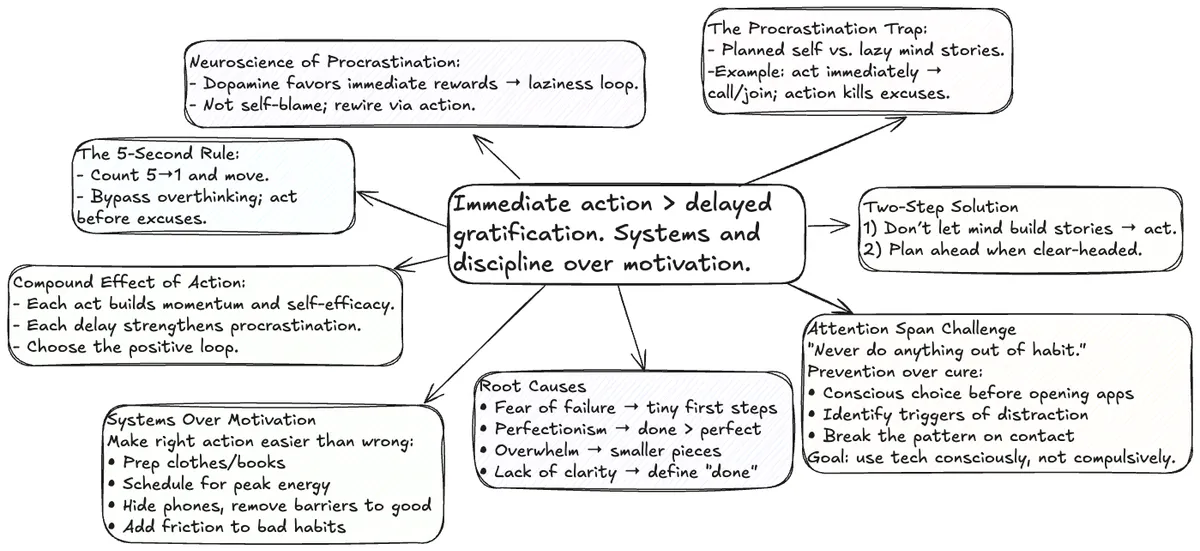
The Neuroscience of Procrastination
Procrastination often stems from your brain’s preference for immediate rewards (like scrolling social media) over long-term benefits, driven by dopamine hits in the short term. Research from habit experts like James Clear shows this creates a “laziness loop” where avoidance feels good momentarily but builds regret. Recognizing this isn’t about self-blame—it’s about rewiring through action.
Understanding the Procrastination Trap
Every morning presents a choice between your planned, thoughtful intentions and the spontaneous desires of your lazy mind. Here’s a real example from my own experience:
One morning at 7:10 AM, I woke up to meet a friend for our daily reading session. My lazy mind immediately began creating stories:
- “Let’s sleep a little more”.
- “Maybe your friend doesn’t want to read today”.
Instead of entertaining these thoughts, I called my friend directly. She immediately said, “Wait a minute, I’m joining,” and we proceeded with our planned session.
The Two-Step Solution
This experience taught me two crucial strategies:
- Don’t let your mind build stories: Act immediately without giving your mind time to create elaborate justifications for avoiding action.
- Plan ahead: Make decisions when you’re thinking clearly, not when you’re tired or distracted. Your advance planning carries more wisdom than your in-the-moment impulses.
The 5-Second Rule
When you know what you should do, don’t give your mind more than 5 seconds to convince you otherwise. Count down — 5, 4, 3, 2, 1 — then act. This prevents your brain from activating its protection mechanisms that keep you in your comfort zone.
This technique works because it bypasses the overthinking that leads to procrastination. Your initial instinct about what you should do is usually correct. The longer you delay, the more reasons your mind will find to avoid action.
The Attention Span Challenge
Modern technology creates a particularly insidious form of procrastination — we train ourselves to be distracted without realizing it. The key insight: “Never do anything out of habit.”
How We Train Ourselves for Distraction
Observe how often you unconsciously open Instagram, Facebook, or WhatsApp even when you consciously know they’re distracting you. Each time you do this automatically, you’re building a habit of distraction.
The Prevention Approach
Instead of trying to cure short attention spans after they develop, focus on preventing them:
- Conscious Choice: Before opening any app or website, pause and ask “Am I choosing to do this, or is this happening automatically?”
- Identify Triggers: Notice what situations or emotions trigger automatic distraction-seeking behaviour.
- Break the Pattern: When you catch yourself reaching for distractions, stop and choose a focused activity instead.
Why Prevention Matters:
- Treating attention problems requires enormous energy to break established habits.
- Many people incorrectly identify the cause of their attention problems and never solve them.
- Prevention is always easier than cure.
- Each automatic distraction reinforces the pattern.
The goal isn’t to eliminate all technology use, but to make it conscious rather than compulsive.
Systems Over Motivation
Motivation is unreliable — it comes and goes based on mood, energy, and circumstances. Systems and discipline are consistent regardless of how you feel. As I often say: “Systems and discipline are more important than motivation alone.”
Create systems that make the right action easier than the wrong action:
- Prepare workout clothes the night before.
- Keep books visible and phones hidden.
- Schedule important tasks for your peak energy hours.
- Remove barriers to good habits and add barriers to bad ones.
The “I Fired Myself” Approach
Sometimes dramatic action is necessary. Once I read one of newsletter of Bryan Johnson in which he said, “I fired the evening Bryan Johnson”. In same way what you can do is call “board meeting” of all the different aspects of your personality and “fire” the procrastinating part that was interfering with your pre-planned routines. This might sound extreme, but it represents taking conscious control over unconscious patterns.
The message is clear: the version of you that makes excuses and procrastinates doesn’t get to override the version that plans thoughtfully for your future. Your disciplined self must have authority over your lazy self.
Addressing Root Causes
Procrastination often stems from:
- Fear of failure: Start with small, achievable actions to build confidence.
- Perfectionism: Accept that done is better than perfect.
- Overwhelm: Break large tasks into smaller, manageable pieces.
- Lack of clarity: Define exactly what success looks like before starting.
The Compound Effect of Action
Taking immediate action creates positive momentum. Each time you act despite not feeling like it, you strengthen your ability to do so again. This builds what psychologists call “self-efficacy” - confidence in your ability to execute plans.
Conversely, each time you procrastinate, you reinforce the pattern and make it harder to act in the future. The choice is between a positive or negative compound effect.
Practical Daily Strategies
- Morning Wins: Complete your most important task first thing in the morning before your mind can create resistance.
- Time Blocking: Assign specific time blocks to specific activities. When it’s time for a task, that’s the only thing you do.
- Implementation Intentions: Instead of vague goals like “I’ll exercise more,” create specific plans: “I will run for 30 minutes at 6 AM on Monday, Wednesday, and Friday.”
- Environment Design: Structure your physical environment to support good habits and discourage bad ones.
The Long-Term Perspective
Remember that procrastination is expensive. Every day you delay starting something important is a day of compound growth lost. Whether it’s learning a skill, building a business, or improving your health, time is your most valuable asset.
The pain of discipline weighs ounces; the pain of regret weighs tons. Choose your pain wisely.